Samples are grouped by topic. Repost by permission only. Thanks.
Health/medicine
Coronavirus diagnostics: what will they tell us?: Since the beginning of the coronavirus pandemic, diagnostics have been touted as the way to understand who is infected, and who has been infected. But the tests have been unreliable, and the pressure we are putting on some of them to return our lives to the way they were before is unfair.
Our microbes do more than we think: A team of scientists found that the bacteria in our intestines actually digest many of the medications we take, and that it might affect the efficacy of these drugs. I talked to several people who study microbial metabolism, including people in industry who design drugs, to better understand how this phenomenon could change the way we make the many small molecules that people take to treat disease.
Drugs of convenience to treat HIV: Where once in the developed world, HIV was a death sentence, an abundance of drugs means this disease is for many, chronic. Industry has responded, looking at ways to make taking HIV medications more convenient, or longer-lasting. Here’s my look at some of this work, through the eyes of a man who was part of the trials for one of these treatments.
Dying the way you want to: In many rural parts of the country, people who are terminally ill decide to die at home. What this means for hospice providers are long days, vast distances in cars, and wildlife, in the quest to give people the dignified death they have requested. I traveled with two hospice nurses in west Texas, as they drove hundreds of miles in a day to treat their patients at home. Nothing is easy in rural hospice. But for those who do it, it’s a calling.
Ebola and Pittsburgh: Ebola hit close to home for the small but active Liberian community in Pittsburgh. I went to a birthday party to talk to several of Pittsburgh’s Liberian residents about how a epidemic thousands of miles away feels like it’s right next door.
A new breed of antibiotics: Bacteria are smart – they’ve figured out how to evade nearly every antibiotic available. Researchers are looking into other ways to effectively kill pathogenic microbes and small peptides built like corkscrews may be one of the answers.
Breast cancer – Men and the Military: At Camp Lejeune in North Carolina, chemicals ran unfettered into the soil and water. Decades later, soldiers and the children of soldiers all over the United States found themselves with breast cancer. Is there a link?
New life for old pacemakers: A pacemaker can save the life of someone with heart disease. But what about two lives? This is what happens when someone with a pacemaker dies.
Medicine on the streets: They roam cities with backpacks on, going into homeless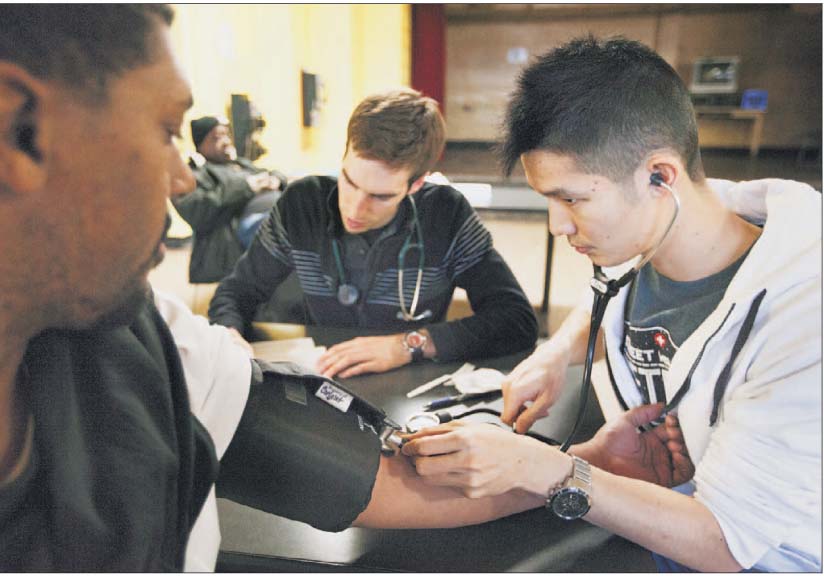 shelters and churches, helping people who have few resources or the means to access them. They are medical students, and what they do is called Street Medicine. (photo by Ryan Garza)
What happens when children have no insurance?: In the days before the Affordable Care Act passed, we looked at Michigan, who was insured and who wasn’t. What we learned was surprising.
Science
What’s in a GMO?: The debate over genetically-modified food has hit a fever pitch in the United States, with labeling laws on the table in several places. As part of my Knight Wallace Fellowship, I looked into the politics, economics and personal stakes of the debate. This is what I found, using Pennsylvania and its labeling law effort as a test case.
Killing off baby birds: Mama birds sometimes sneak their babies into another  mama’s nest, hoping to get out of raising them. But duck-like coots are smart enough to recognize their own babies, and instead of raising someone else’s chicks, mama coots kill them. (photo credit: freebird4 via photopin cc)
We mated with Neanderthals: We did. According to a multi-university research study, those of us from certain parts of Europe have Neanderthal genes mixed in with our Homo sapiens-ness. The research also found a gene with some links to autism.
What the Hubble Telescope reveals: The Hubble Telescope has given us tons of information about outer space. In this study, the telescope is telling us about our galaxy, the Milky Way, and what it looked like when it was really young. It’s a time machine and telescope, all in one.
When stem cells meet politics: Michigan residents fought a hard-won battle to allow embryonic stem cell research in the state. The stakes were high, and the value was debated. Here’s a look at a debate that drew people to the polls in 2008.
A Whiff of What?: Cocoa is one of the world’s most important crops. Yet, the reminiscent smell of winter days is part cabbage, part armpit. A smell scientist explains why.
A new type of breast cancer test: Breast exams are sometimes painful. They don’t always give clear results. Michigan scientists have created a new type of ultrasound-based exam that in the words of one user, are like a “spa.”
What’s in your water?: Anything you throw away or flush down the toilet ends up in our water supply, including pills. Scientists are finding all kinds of antibiotics, prescription drugs and hormones in our water supply. Sometimes, you can’t see what’s polluting your water, and it’s getting scary.
Confessions of a Failed Mathlete: My personal struggle with math tests for a science blog that took matter (and anti-matter) into their own hands.
Environment
What are you breathing?: A compact air pollution monitor developed in Pittsburgh is giving consumers a lot of leverage to battle air pollution in their towns and their homes.
Tires – a new form of electricity?: Michigan is known for cars, and with cars come incredible amounts of tire waste. Several power plants now use tires to create electricity. But, in some communities, it has come at a cost.
When lake levels drop: Last year, water levels in some of the Great Lakes dropped so low that everyone from ecologists to economists were worried. For states that rely on the Great Lakes for shipping, and environmentalists trying to keep the lakes and its inhabitants healthy, it was a season of shared fear.
An Urban farmbelt is changing Detroit: In a tucked away neighborhood more 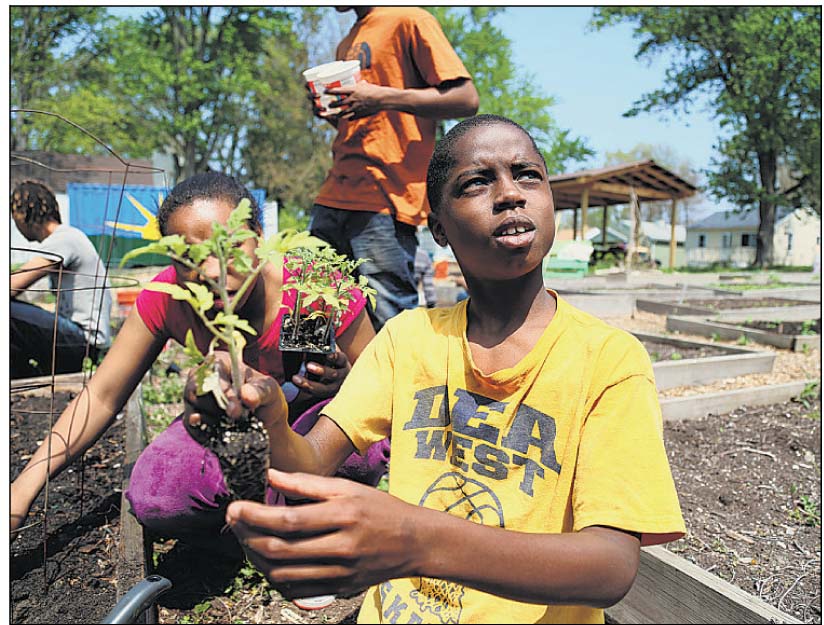 known for blight than broccoli, urban farming is changing the landscape, in every possible way. The Brightmoor Farmway looks at vacant land as a means to self-sufficiency and a way to reunite a community torn apart by crime and neglect. (photo by Kimberly Mitchell)
Fire for life: Detroit is known for its arson problem. But in the city’s larger parks, maintenance crews have to burn the fields occasionally, to clear out those things that choke the natural growth.
A second life for bullet-proof vests: What happens to bullet-proof vests after police officers can no longer use them? Several police departments were looking for a solution for rooms filled with them, and one thinks they’ve found the answer: recycling.
Where did all the sealions go? In the San Francisco Bay Area, one thing that tourists always count on are sealions on the wharf. But 2010 was an interesting year along the California Coast – the sealions went away, and people started asking why.
Investigation/Narrative
Upheaval at one of the state’s largest non-profits: Four members of the board of directors resigned after learning that the animal welfare non-profit they supported with time and money was euthanizing the majority of the animals that came through the doors. This was one of many stories covering the events surrounding the resignations and the impact on animal welfare in Michigan.
The good-guy drug dealer: He was the good-guy drug dealer, cleaning up the 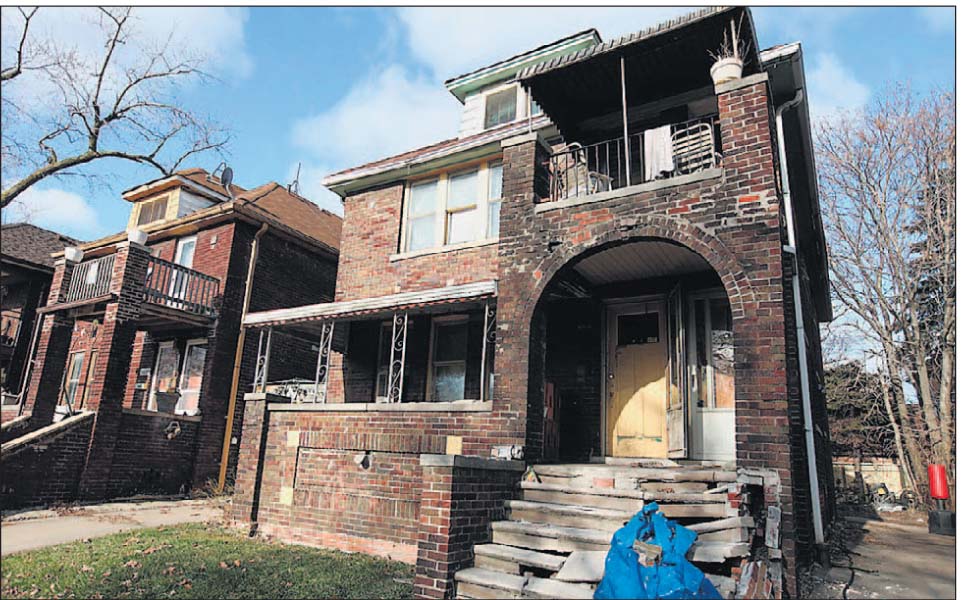 neighborhood while he fed people’s addictions. Eventually, his neighbors couldn’t take it anymore. Here’s how they worked with police to catch him. (photo by Mandi Wright)
Thousands of houses that no one wants: Every year, the county where Detroit is located tries to sell off thousands of houses in property auctions. This was a look at what’s at the bottom of the barrel, and what happens to neighborhoods filled with rows of empty houses. (video by Romain Blanquart: http://on.freep.com/1kQRhKu)
When dad is John Doe: A woman searches for her father, missing and with dementia. A John Doe turns up at the morgue, and no one can ID him. This story changed policy between the Detroit Police Department and the Wayne County Medical Examiner’s Office, promoting the sharing of information to rapidly identify bodies without identification.
She faked her son’s cancer: Her young son was sick, she said. He was dying. Only, he wasn’t. The shaved eyebrows and head, the sickly pallor, it was all a ruse to raise money to pay off bills.
A new breed of squatters in Detroit: One of the side-effects of the housing crisis in Detroit is a burgeoning population of feral cats. Here’s how cities deal with them, neighborhoods work with them, and animal welfare groups protect them.
A family looking for closure: More than 20 years ago, a young woman who had fallen on hard times was murdered, leaving behind a daughter and a sister who have agonized over what happened. The case was reopened, and the family was able to say goodbye.
Technology
Rapid wound healing: The leftovers from blood donation could be the key to rapid wound healing. A Pittsburgh company and the “bone putty” that’s in clinical trials.
Cell phone ads – the next generation: You know those text messages you get reminding you of your doctor’s appointment? One of the companies that pioneered text marketing in is Michigan, and at the time, they said it would be the way of the future.
He posted what? : As social media picked up steam a few years ago, cities were suddenly tasked with teaching their employees what they could – and couldn’t – do. Like posting pictures of evidence on Facebook.
When meters go high tech: Fumbling for quarters is the worst when you are trying to park. Several cities in Michigan started using electronic parking meters a few years ago. This is how it came to be.
Your city, all online: City officials say they want to be transparent, and some are putting everything online, including interactive maps that help you do everything from figuring out property lines to booking a tennis court.
On the Lighter side
When news is poetry: With the launch of an app that allows people to study The Canterbury Tales, I decided to write about it for C&EN. In iambic pentameter. My high school English teachers gave me an A+
Horses come to the city: A group of men who live in the middle of Detroit ride 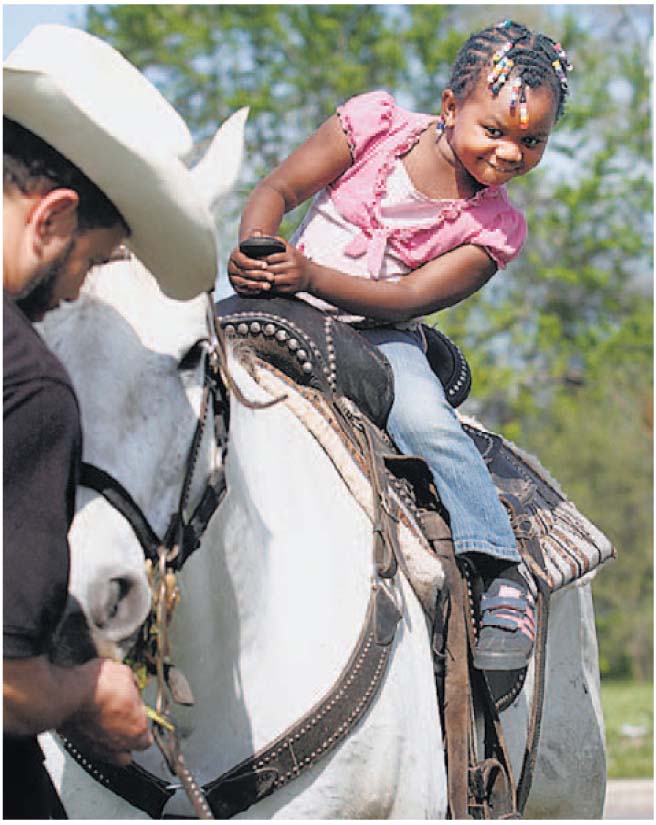 horses around the neighborhood. Their goal? Bringing a bit of the country to kids bombarded by urban decay. (photo by Jarrad Henderson; video at http://on.freep.com/1feBp5c)
Easter – a rental story: A farmer just north of Detroit decided to rent out baby chicks one Easter for all the little kids that wanted to raise them. Two weeks, and when they come back, they are added to the flock. Here’s how he came up with the idea.
 Megha Satyanarayana